
 Partager par email
  Partager sur Facebook
  Partager sur Linkedin
  Partager sur X
  Partager sur WhatsApp

À propos du fromage de chèvre
L'histoire du fromage de chèvre
Parcourez plus de 10 000 ans d’histoire du fromage de chèvre en vous arrêtant sur ces dates clés, depuis les origines jusqu’à nos jours !

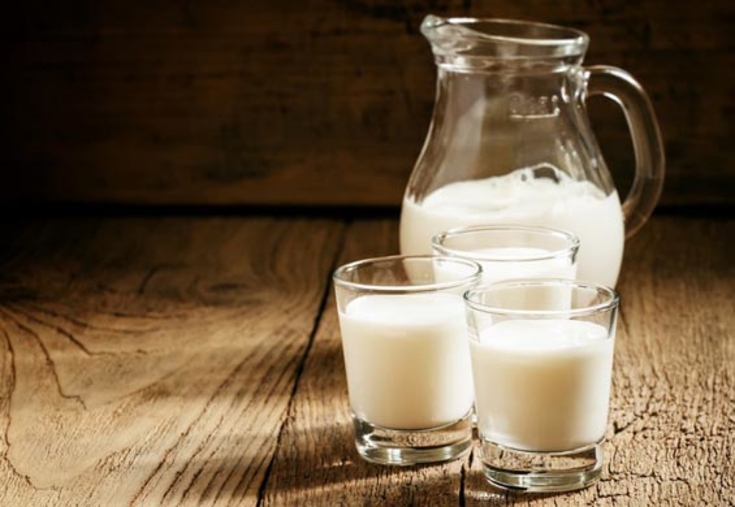
FAUX.
Le lait de chèvre écrémé a une faible teneur en matières grasses, tout comme le lait de vache.
Par exemple : un verre de 150 ml de lait de chèvre écrémé contient environ 2,5 g de matières grasses. Cela représente une part relativement faible de l’apport journalier recommandé, qui est de 70 g par jour [1] pour un adulte en bonne santé.
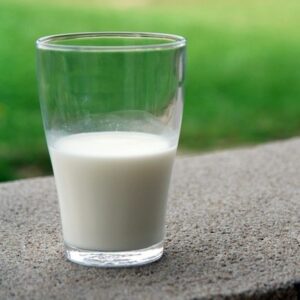
TRUE
Goat cheese, whether full fat or half fat, skim contains lots of high-quality proteins.
Beyond the quantitative aspect, goat milk contains proteins that are able to provide all of the essential amino acids. These are the building blocks of proteins that cannot be synthesized by the body, and which must therefore be obtained through diet. The amino acids provided through diet are used to renew the proteins in our body which make up our muscles, bones, and organs.
In addition, milk proteins are generally very digestible. Our body is able to use almost all of them. In fact, we digest and absorb 95% of the milk proteins that we consume.
TRUE and FALSE
It all depends on the type of dairy product and the nutrient in question.
On the whole, goat milk, whether full fat or half fat, contains high levels of magnesium, potassium, sodium, and vitamin B3 in comparison to cow milk.
In addition, goat milk is a « source of calcium and phosphorous », and therefore helps to maintain a normal bone structure. A 150 ml glass of goat milk therefore provides 20% of the Reference Daily Intake of calcium and almost 25% of phosphorus requirements.
During the cheese-making process, the maturing stage in particular allows other vitamins to develop. The goat cheese log is therefore « rich in vitamins B2 and B9 ».
Good to know
The adult human body contains around 1.2-1.4 kg of calcium, 99% of which is found in the bones and the teeth. Milk and dairy products are an ideal source of calcium in terms of both the amount of calcium they provide and its availability to the body.
Milk also contains phosphorus which, along with calcium and magnesium, makes up the mineral mass of the bones in the skeleton.
The calcium and phosphorus provided by milk and dairy products complements bone health and helps to effectively maintain it.
B vitamins, such as vitamins B2, B3, and B9 in particular, help to reduce fatigue.
TRUE
Goat milk, whether full fat or skim, contains an average of 4.2 g2 of lactose per 100 ml This is slightly less than cow milk which has 4.7 g2 of lactose per 100 ml.
With this lactose content, drinking a 150 ml glass of goat milk3 (providing 6 g of lactose) can easily be tolerated by people who are diagnosed as being lactose intolerant. In fact, a study conducted on subjects with a lactase deficiency (the enzyme which breaks down lactose) demonstrated that consuming up to 7 g of lactose in one sitting could be tolerated without experiencing any additional digestive symptoms, in comparison to consuming « lactose-free » milk4.
For more information, take a look at our article about lactose intolerance here.
VRAI et FAUX
Remarque : l’allergie au lait de vache (ALV) est la cause la plus fréquente d’allergies alimentaires chez les bébés, bien qu’elle ne touche que 2 à 3 % des jeunes enfants âgés de 3 à 6 ans.
En conclusion, les protéines du lait de chèvre peuvent déclencher des allergies, mais avec une fréquence bien moindre que l’ALV.
Dans tous les cas, les personnes allergiques aux protéines du lait de vache ne doivent pas remplacer le lait de vache par du lait de chèvre sans avis médical.
VRAI et FAUX
De nombreux consommateurs, mais aussi de nombreux professionnels de santé, présentent le lait de chèvre comme étant plus digeste, et cette idée s’appuie sur plusieurs explications scientifiques. Plusieurs explications scientifiques soutiennent l’idée que le lait de chèvre est plus digeste que le lait de vache :
En ce qui concerne le lait de chèvre, il reste encore des secrets et des bienfaits potentiels à découvrir.
[1] Apports de Référence en matières grasses au sens du Règlement UE n°1169/2011 – INCO.
[2] Table CIQUAL, 2017.
[3] Portion recommandée dans le cadre du Programme National Nutrition Santé (PNNS). Lancé en France en 2001, le PNNS est un plan de Santé Publique visant à améliorer l’état de santé de la population en agissant sur l’un de ses déterminants majeurs, la nutrition : http://www.mangerbouger.fr/Les-recommandations/Aller-vers/Les-produits-laitiers
[4] Vesa TH, Seppo LM, Marteau PR, Sahi T, Korpela R. Role of irritable bowel syndrome in subjective lactose intolerance. Am J Clin Nutr 1998;67:710-5.
[5] Bellioni-Businco B., Paganelli R., Lucenti P., Giampietro P.G., Perborn H., Businco L., 1999. Allergenicity of goat’s milk in children with cow’s milk allergy. J Allergy Clin Immunol., 103(6):1191-1194.
[6] Osborne N.J., Koplin J.J., Martin P.E., Gurrin L.C., Lowe A.J., Matheson M.C., Ponsonby A.L., Wake M., Tang M.L., Dharmage S.C., Allen K.J., 2011. Prevalence of challenge-proven IgE-mediated food allergy using population-based sampling and predetermined challenge criteria in infants. J.Allergy Clin.Immunol., 127(3):668-676. Schoemaker A.A., Sprikkelman A.B., Grimshaw K.E., Roberts G., Grabenhenrich L., Rosenfeld L., Siegert S., Dubakiene R., Rudzeviciene O., Reche M., Fiandor A., Papadopoulos N.G., Malamitsi-Puchner A., Fiocchi A., Dahdah L., Sigurdardottir S.T., Clausen M., Stanczyk-Przyluska A., Zeman K., Mills E.N., McBride D., Keil T., Beyer K., 2015. Incidence and natural history of challenge-proven cow’s milk allergy in European children–EuroPrevall birth cohort. Allergy, 70(8):963-972.
Parcourez plus de 10 000 ans d’histoire du fromage de chèvre en vous arrêtant sur ces dates clés, depuis les origines jusqu’à nos jours !
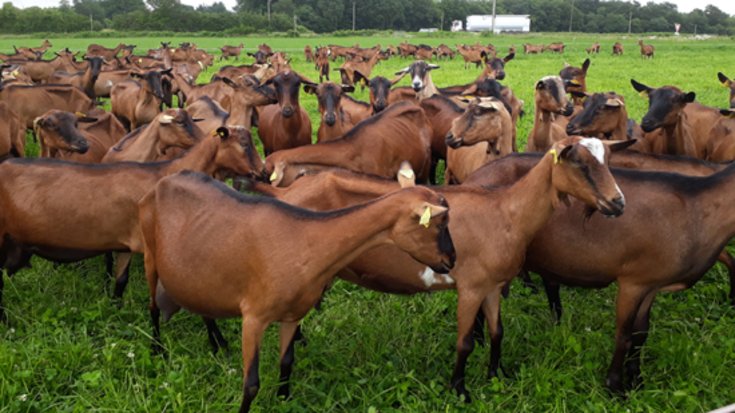
La première chose essentielle qui fait le succès des délicieux produits Soignon, c’est la passion de nos éleveurs pour leur métier. Ajoutez-y le lait de qualité de nos chèvres, ainsi qu’une pincée du savoir-faire et de l’engagement de nos collaborateurs, et vous obtenez la recette de nos fromages et yaourts de chèvre tant appréciés ! Nous allons vous montrer exactement le parcours de notre lait de chèvre, de nos fermes à votre table. Laissez-nous vous guider !
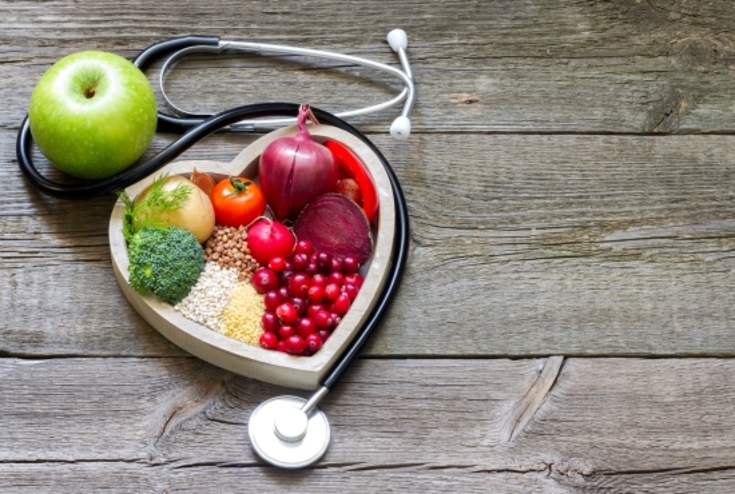
Le cholestérol peut avoir des effets néfastes sur notre santé, en particulier sur le cœur. Pour le maîtriser, il est essentiel d’adopter une alimentation variée et équilibrée. Mais quelle place occupent les produits laitiers dans tout cela ? Laissez Soignon vous expliquer.